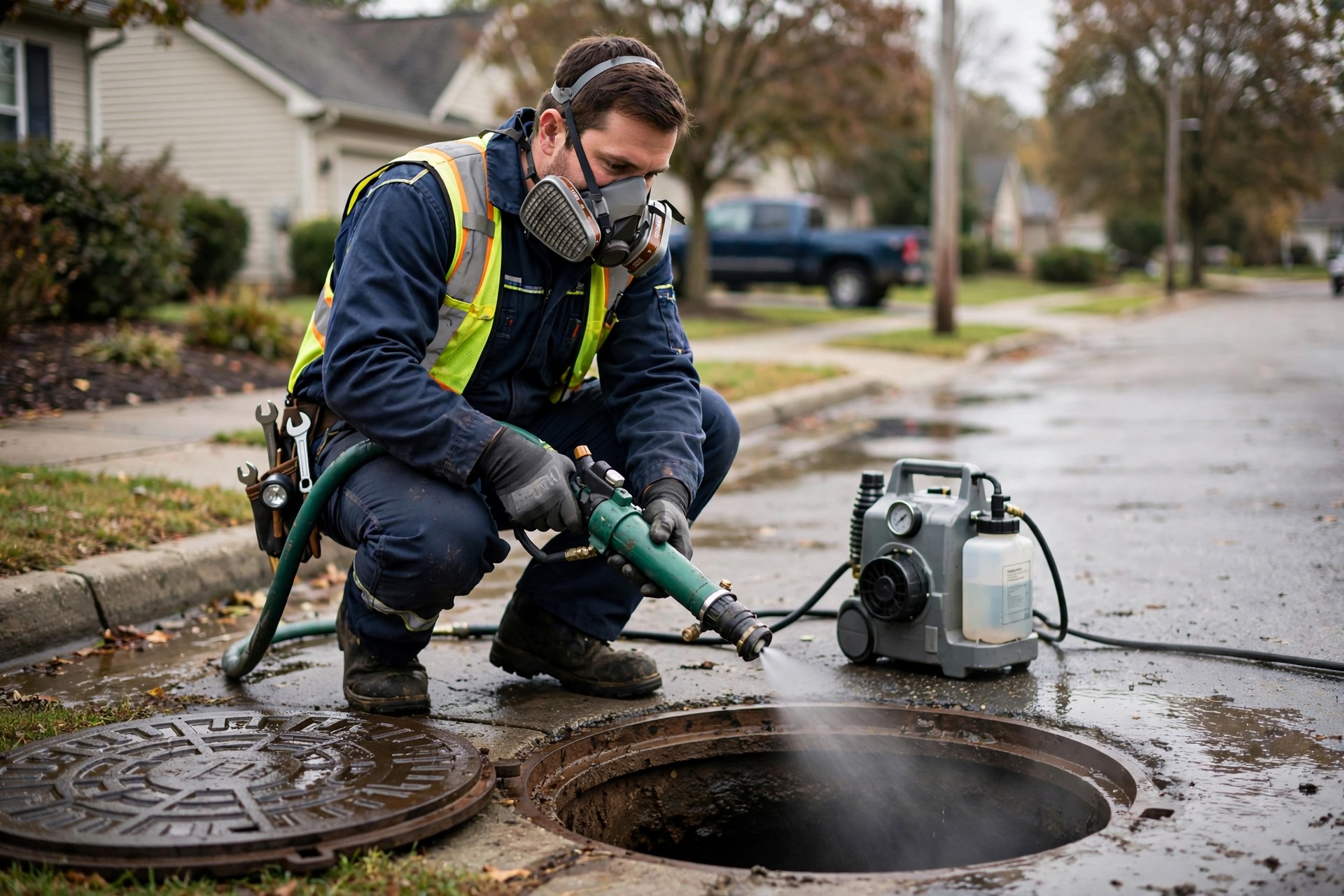
In Waldorf homes built from the 1970s through 1990s in neighborhoods like Pinefield and Westlake, sewage odors often travel through slab cracks and crawl spaces because the clay-heavy soil holds moisture long after backups occur. Hot, humid summers accelerate bacterial growth on subfloors and insulation, so simple fans or sprays fail to reach trapped gases. Technicians must pull baseboards, treat joists with enzyme solutions rated for porous materials, and run negative-air machines for several days to prevent recontamination in the humid air common near Brandywine and La Plata.
Accokeek and St. Charles properties frequently have finished basements added after original construction, which creates hidden pockets behind drywall where odor molecules bind to paper facing. Removing only the carpet or visible waste leaves residual smells that return once humidity spikes. Proper work includes cutting away affected drywall at least 18 inches above the water line, applying antimicrobial coatings that meet Maryland building standards, and sealing concrete with vapor barriers before new materials go in.
Sewage odor removal near the St. Charles Towne Center and Waldorf Jaycees Community Center often involves older septic tie-ins that leak during heavy summer storms. These jobs require checking both the home and the public sewer lateral because odors can migrate from the street. Crews use portable gas monitors to confirm zero hydrogen sulfide readings before they leave, and they document moisture levels with meters so homeowners in Charles County have proof the structure is dry.
Technician insight
In Waldorf, the thing that catches most people out with Sewage odor removal is the clay soil around Westlake and Pinefield that keeps moisture against foundations for weeks after a backup. Homeowners often think running a dehumidifier for a few days is enough, but the odor returns the next time humidity climbs because the slab never fully dries without extraction and sealing.
Pinefield Basement Odor Return
A homeowner in Pinefield noticed sewage smell returning two weeks after a backup. Inspection showed moisture trapped under the slab and behind baseboards installed in the 1980s. Crews removed the lower drywall, treated the joists and concrete with enzymes, sealed the slab, and ran negative air until readings hit zero.
Sewage Odor Removal Services We Offer
✓Basement Subfloor Odor Extraction
Removes trapped gases from plywood and joists common in 1980s Waldorf homes by lifting flooring and applying targeted enzyme treatments.
✓Crawl Space Odor Treatment
Addresses moisture trapped under homes in Pinefield and Accokeek where clay soil prevents natural drying after sewage events.
✓Drywall and Insulation Odor Removal
Cuts and treats contaminated walls in finished basements throughout St. Charles and Westlake to stop hidden bacterial regrowth.
✓Concrete Slab Odor Sealing
Applies vapor barriers and sealers on slab foundations typical of older Charles County properties to block rising sewer gases.
✓Carpet and Pad Odor Remediation
Extracts and disposes of saturated flooring while treating underlying surfaces in homes near Brandywine and La Plata.
Sewage Odor Removal Cost in Waldorf, MD
| Service | Typical Range | What Affects It |
|---|---|---|
| Initial Odor Assessment | $150–$300 | Higher when crawl space entry is required in Pinefield or Accokeek homes |
| Enzyme Treatment Per Room | $400–$750 | Includes equipment runtime for humid summer conditions |
| Subfloor Odor Extraction | $800–$1,600 | Varies with square footage and whether baseboards must be removed |
| Slab Sealing After Treatment | $350–$650 | Common add-on for 1970s–1980s homes in St. Charles and Westlake |
Pricing confirmed on-site before work begins. Call 24/7 for immediate dispatch.
How it works
- 1
On-Site Assessment
Technicians inspect affected rooms, test air quality, and map moisture in crawl spaces or slabs common to Waldorf homes.
- 2
Source Removal
Extract standing waste and cut away saturated materials such as carpet, drywall, and insulation.
- 3
Enzyme Application
Apply EPA-registered enzymes to porous surfaces and run negative air to pull odors from wood and concrete.
- 4
Drying And Verification
Use dehumidifiers sized for humid summers, then confirm zero gas readings before any reconstruction.
Pricing
Cost depends on square footage affected, access to crawl spaces, and whether drywall or subfloors must be removed in older Waldorf homes.