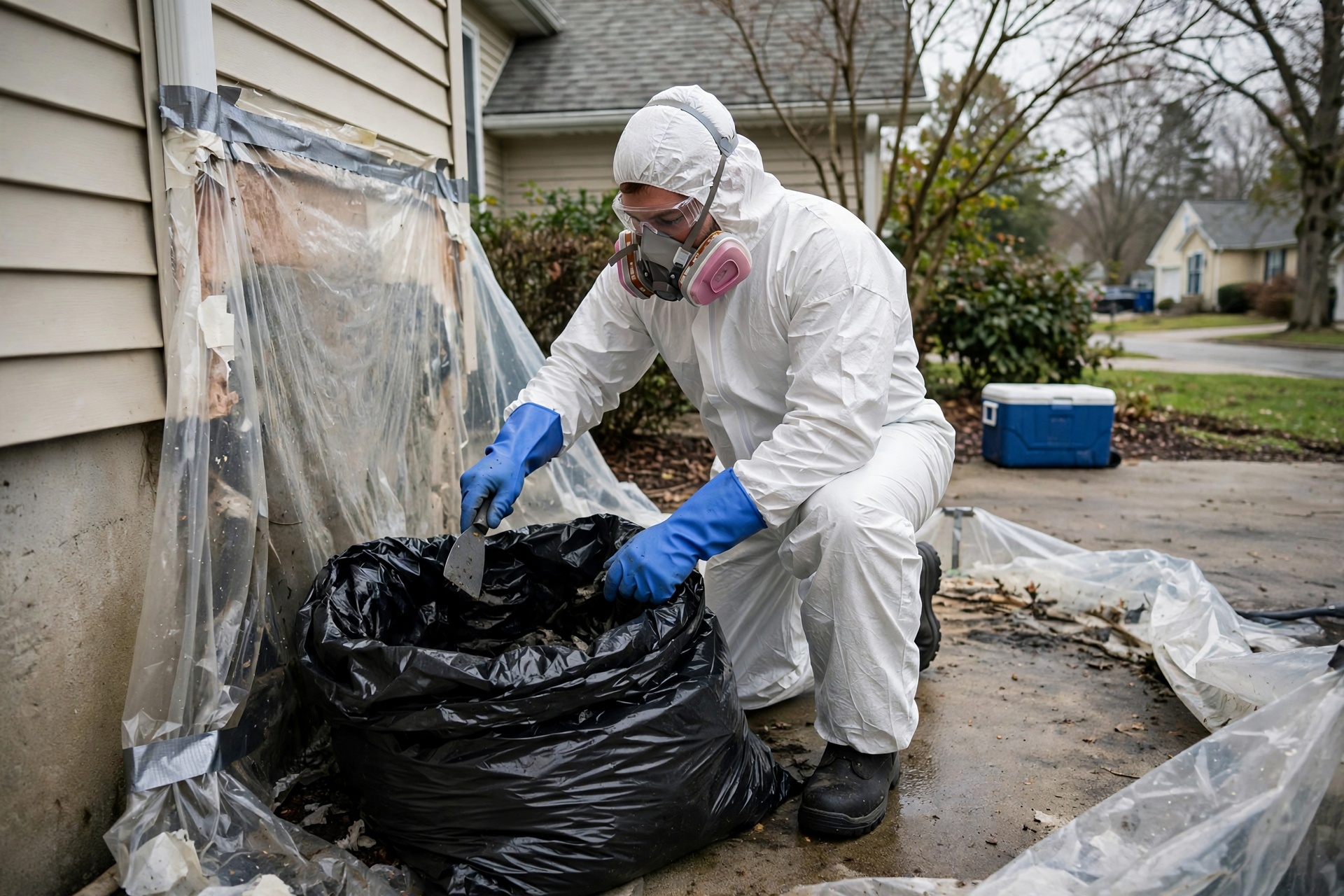
Sewage backups in Waldorf often affect older homes in Pinefield and St. Charles where clay-heavy soils and aging cast-iron lines allow waste to migrate under slabs and into crawl spaces. Contaminated material removal requires separating saturated carpet pads, vinyl flooring, and baseboards before they release pathogens into living areas, especially during humid subtropical summers when high moisture accelerates bacterial growth. Crews follow Charles County health guidelines for bagging and hauling these items to approved disposal sites rather than standard landfills.
In neighborhoods like Westlake and Accokeek, backups frequently reach drywall up to 18 inches above floor level and soak insulation behind cabinets. Removing these layers without spreading aerosolized contaminants means using negative-air machines and sealing off HVAC returns before any demolition begins. Homeowners near La Plata or Brandywine face similar issues after heavy summer storms when stormwater overwhelms shared lines, forcing crews to extract and replace more porous materials than in newer construction.
Proper handling also includes testing soil around foundations in low-lying sections of Pinefield where water tables sit close to the surface. Any excavated dirt mixed with sewage must be treated as regulated waste and replaced with clean fill to prevent long-term odor and health issues. Skipping this step commonly leads to repeat odors months later when summer heat draws residual moisture upward through slab cracks.
Technician insight
In Waldorf the thing that catches most people out with contaminated material removal is how quickly summer humidity drives sewage into the particleboard underlayment used in 1980s Pinefield and St. Charles split-levels. Once that happens you have to pull baseboards and check the bottom plate or the smell returns every time the AC cycles.
Westlake Backup After Summer Storm
A sewage line backed up into a Westlake ranch after heavy rain overwhelmed the main. Waste had wicked under the vinyl plank and into the crawl-space insulation. Crews removed the flooring and insulation, treated the joists, and replaced the excavated soil along the foundation before odors could migrate back into living spaces.
Contaminated Material Removal Services We Offer
✓Carpet and Pad Extraction
Full removal of sewage-soaked carpet and underlayment from St. Charles and Westlake homes to stop bacterial spread into subfloors.
✓Drywall and Insulation Removal
Cutting out and disposing of contaminated wall sections and fiberglass batts in Pinefield properties where moisture wicks upward from slab leaks.
✓Furniture and Belongings Disposal
Safe bagging and transport of saturated couches, mattresses, and personal items that cannot be salvaged after a Charles County sewage event.
✓Soil and Foundation Decontamination
Excavation and replacement of sewage-tainted soil around Accokeek and Brandywine foundations to eliminate hidden reservoirs of contamination.
✓Appliance and Fixture Removal
Disconnecting and hauling away water heaters, washers, and toilets that have drawn sewage into internal components during backups.
Contaminated Material Removal Cost in Waldorf, MD
| Service | Typical Range | What Affects It |
|---|---|---|
| Carpet and pad removal per room | $350–$650 | Higher when pad has wicked into subfloor seams common in older Pinefield slabs. |
| Drywall and insulation removal per linear foot | $45–$85 | Increases with height above floor and presence of textured finishes in St. Charles homes. |
| Soil excavation and replacement per cubic yard | $275–$450 | Required in low-lying Accokeek yards where clay retains sewage longer. |
| Large appliance disposal | $200–$400 | Covers disconnection and haul-away of washers or water heaters in Westlake properties. |
Pricing confirmed on-site before work begins. Call 24/7 for immediate dispatch.
How it works
- 1
Site Assessment
Technicians inspect affected rooms in the Waldorf home, map moisture migration through floors and walls, and identify all materials requiring removal.
- 2
Containment Setup
Plastic barriers and negative air are installed to isolate the work zone from the rest of the house before any demolition starts.
- 3
Material Extraction
Saturated carpet, drywall, insulation, and soil are cut out, double-bagged, and loaded for transport to approved Charles County disposal facilities.
- 4
Final Clearance
Remaining surfaces are rinsed and dried; the homeowner receives documentation of removed materials and disposal locations.
Pricing
Pricing depends on square footage affected, depth of contamination into soil or walls, and whether disposal occurs during normal business hours or after-hours emergencies.