2026-10-19 ·
Complete Guide to Contaminated material removal in Waldorf, Maryland
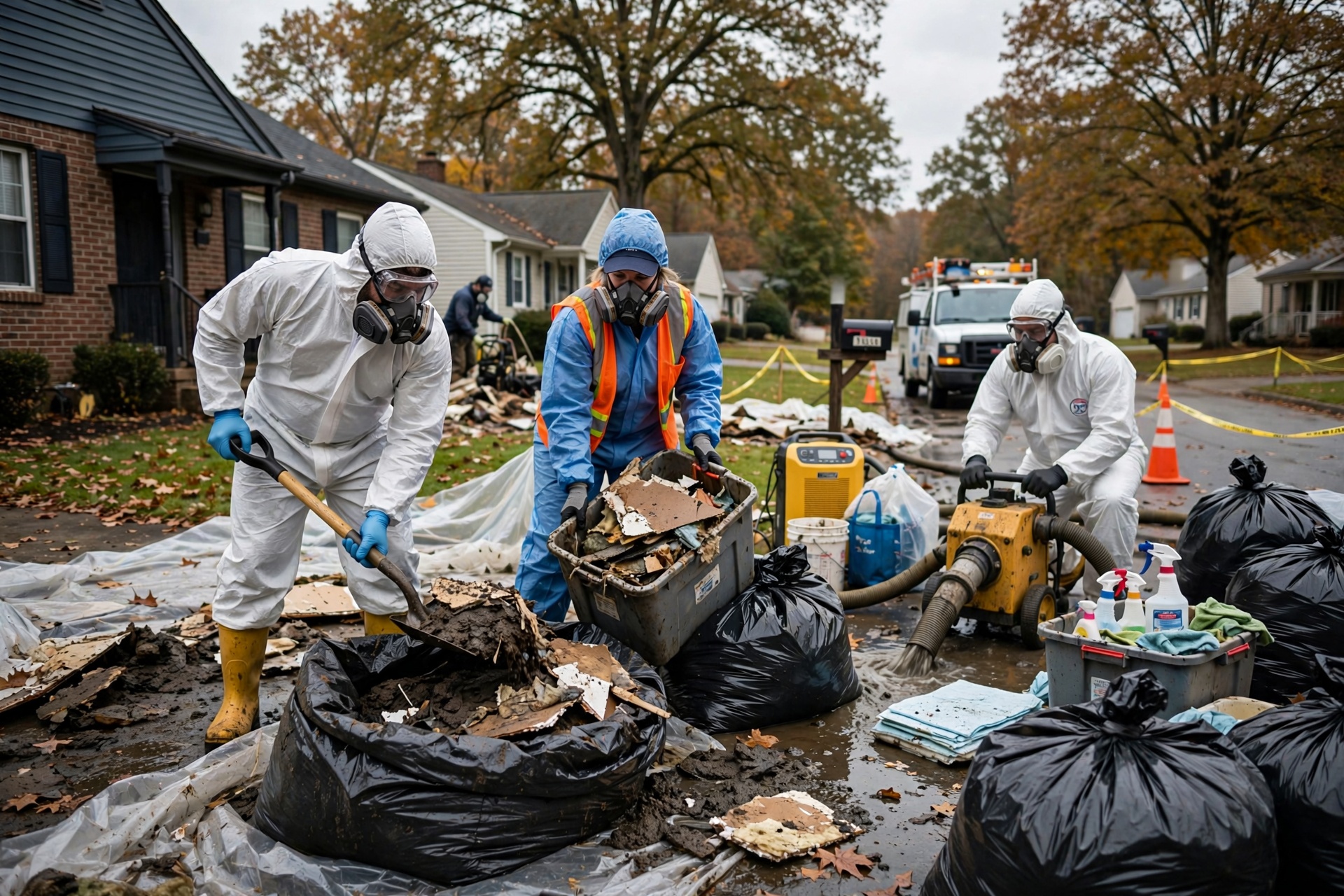
Contaminated material removal in Waldorf typically begins with identifying and extracting porous items like carpet, drywall sections, and insulation within 24-48 hours of a sewage backup to limit bacterial spread. Homes in Charles County often feature slab foundations or crawl spaces built between the 1970s and 1990s, which trap moisture differently than newer builds and require precise cutting to avoid structural compromise.
Identifying Contaminated Materials in Local Homes
Waldorf neighborhoods such as St. Charles and Pinefield contain many split-level and ranch-style homes where sewage backups frequently affect lower levels connected to municipal lines. Materials like particleboard cabinets, vinyl flooring underlayment, and upholstered furniture absorb black water rapidly due to the area's humid subtropical climate with hot summers that accelerate microbial growth. Operators assess saturation depth by probing baseboards and checking subflooring, especially near St. Charles Towne Center where older plumbing runs parallel to retail drainage. In Westlake, properties with finished basements see more widespread contamination from rising groundwater after heavy rains. Accokeek homes on larger lots may involve septic-adjacent backups that introduce additional solids requiring separate handling. Removal prioritizes items within 18 inches of the contamination line while preserving salvageable framing when possible.
Step-by-Step Removal Process Used in Charles County
Technicians start by establishing containment zones using plastic sheeting and negative air machines to isolate affected rooms in Pinefield or nearby La Plata residences. They then document every item with photos before cutting out saturated drywall in 2-foot increments above the water mark. Flooring removal follows, with subfloor drying times extended by high humidity levels common in summer months. Items are double-bagged and transported for disposal at approved Charles County facilities rather than standard landfills. Final verification includes moisture meter readings below 15 percent before any reconstruction begins. This methodical approach accounts for the clay-heavy soils around Brandywine that slow natural drainage and prolong exposure risks.
Local Challenges from Weather and Housing Stock
Hot, humid summers in Waldorf increase the urgency of contaminated material removal because temperatures above 85 degrees combined with high moisture promote rapid odor and mold development within 72 hours. Older homes in the Berry Road Corridor area often have cast-iron pipes prone to root intrusion, leading to repeated backups that saturate multiple layers of flooring. Terrain slopes toward the Mattawoman Creek watershed can direct runoff into lower-lying Pinefield properties, complicating extraction. Operators at 3840 Crain Hwy maintain 24/7 Emergency Service to respond before secondary damage sets in. These conditions differ from drier regions, requiring extra dehumidification capacity during peak summer calls.
Health Considerations During Removal
Sewage introduces pathogens that remain viable longer in Charles County's warm climate, making full removal of porous materials essential before any occupancy. Crews wear full PPE including respirators when working near St. Charles or Westlake homes where families may have young children or elderly residents. Cross-contamination is prevented by dedicated tool sets and vehicle separation. Post-removal, surfaces receive targeted disinfection rather than simple wiping, addressing the biofilm that forms on concrete slabs common in local construction. This protects against respiratory issues that can arise from incomplete jobs in humid conditions.
Continuing Your Research on Waldorf Sewage Issues
For deeper details on extraction techniques, review the Complete Guide to Sewage extraction and removal in Waldorf, Maryland. Homeowners dealing with backups should also examine sewage backup cleanup options and black water cleanup protocols tailored to the region. Properties in St. Charles face unique drainage patterns that influence removal scope.